Predictions
30 November, 2025
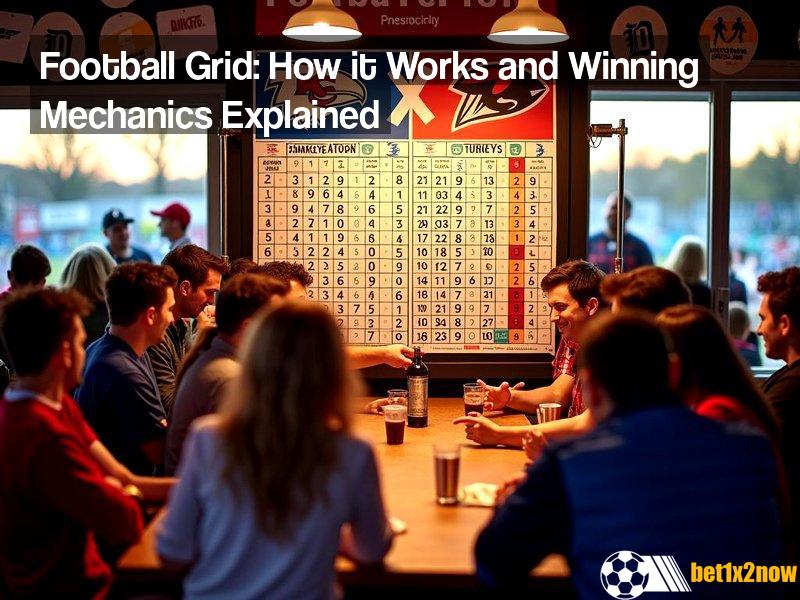
Prepare yourself to dive into the exhilarating realm of the football grid game! This entertaining game of chance typically comes alive during the Super Bowl, injecting an extra layer of excitement into the festivities. Players find themselves on the edge of their seats, eagerly anticipating the potential score outcomes as the game unfolds.
The Football Grid Game has become a beloved pastime for fans, particularly during significant American football events like the Super Bowl. This engaging game unfolds on a 10×10 grid, comprising 100 squares that each symbolize a possible score outcome determined by the last digits of the teams’ scores. Participants typically purchase squares, and the winners are decided by how well their selections match the final digits of each team’s scores at the end of every quarter or at the game’s conclusion.
Not only does the Football Grid Game heighten the thrill of watching the match, but it also presents an opportunity to win exciting prizes. This dynamic aspect makes it especially attractive for fans eager to deepen their connection to the event. The game’s interactive format invites participants to immerse themselves in the action, as their chosen squares could unlock potential winnings as the game progresses.
The Football Grid is an exhilarating game that enhances the experience of watching football. Players purchase squares on a 10×10 grid, which consists of 100 squares in total. Each square corresponds to potential score outcomes based on the final digits of the scores from both competing teams.
Once all the squares have been sold, numbers ranging from 0 to 9 are randomly assigned to each row and column of the grid. This assignment is crucial as it shapes the game’s progression. As the match unfolds, the last digits of each team’s score determine which squares emerge victorious. For instance, if Team A finishes the first quarter with a score of 23 (last digit 3) and Team B has 10 (last digit 0), then the square that aligns with 3 and 0 will be the winner.
What makes this game particularly thrilling is its reliance on luck; participants have no control over the outcomes, which heightens the suspense. Typically, prizes are awarded for the winning squares at the end of each quarter as well as for the final score, giving players multiple opportunities to win during the game. This dynamic format not only enhances viewer engagement but also fosters a spirited competitive atmosphere, making the Football Grid a favored activity during major football events, such as the Super Bowl
The charm of Football Squares lies in its straightforward yet captivating mechanics, which have contributed to its popularity during football events, particularly the Super Bowl. The game is played on a 10×10 grid consisting of 100 squares, where players purchase squares that correspond to potential score outcomes determined by the final digits of the two teams’ scores.
To kick things off, participants buy squares at a set price. Once the grid is filled, random numbers ranging from 0 to 9 are assigned to each row and column. This randomization is a key element, as it ultimately dictates the winning squares based on the last digits of the scores at the end of each quarter and the final whistle.
As the game progresses, after each quarter, the last digits of the teams’ scores are referenced against the numbers on the grid. For example, if Team A finishes the first quarter with a score of 17 (last digit 7) and Team B has 14 (last digit 4), the winning square corresponds to the point where 7 and 4 intersect on the grid. Excitingly, prizes are awarded not only for each quarter’s results but also for the final score, which heightens the thrill for everyone involved.
What makes Football Squares particularly appealing is that it’s purely a game of chance, with no skill needed to participate. This combination of luck and the possibility of winning makes Football Squares a beloved tradition during significant football events, fostering an exhilarating atmosphere for all.
Winning in the Football Grid revolves around matching the last digits of both teams’ scores at the conclusion of each quarter, as well as the final score. Each square on the grid signifies a unique combination of these digits. To illustrate, if Team A finishes the first quarter with a score of 10 and Team B has 3, the winning square will be identified by Team A’s last digit (0) and Team B’s last digit (3).
Payouts are structured to incentivize players based on the timing of their wins. Generally, 20% of the overall prize pool is allocated for each of the first three quarters, while the final score carries a more substantial share, typically around 40%. Grasping this payout distribution is essential, as it keeps players engaged from start to finish.
The actual amounts awarded can vary depending on the number of squares sold and the collected entry fees. For example, if the total prize pot amounts to $1,000, winners from the initial three quarters would each receive $200, whereas the victor of the final score would take home $400. This payout framework not only intensifies competition but also amplifies the excitement as participants strive for those winning squares throughout the game.


Play responsibly
In United Kingdom, betting can only be conducted through entities that hold the appropriate license to organize betting activities.
If you notice signs of addiction, immediately contact an organization that offers help to overcome addiction: Play responsibly!


